A full year has already passed since I began this work. Day and night, even in that space between dreams and sleep, I continue to speak with my father in my heart. Even now, memories and realizations sometimes come to me like images projected from an old film reel. Looking back, even though it may have seemed like a detour, stopping once to reassess was the right decision. I continue to be astonished by the depth of Hongaku Kokki-ryu in every respect.
I could never have come this far alone. I offer my deepest gratitude to the many people who have supported me.
Hongaku Kokki-ryu Yawara Shibata-den Preservation Society
Center: The late Master Yasusuke Otsu, 11th-generation headmaster
Left: The late Kosaku Shibata, third disciple and the person entrusted with the next generation
Right: Presumed to be the second disciple / Photo presumed to have been taken by the first disciple
Please review the confirmation page first
Request for Assistance in Gathering Information
Information RequestIn order to collect and verify information, we kindly ask for your understanding and cooperation regarding the following matters.
Information we are seeking regarding Hongaku Kokki-ryu Yawara- Old testimonies from people connected with Hongaku Kokki-ryu.
- Information about people who trained in the art as adults, their families, or photographs from that period.
- Old documents, whether in digital or physical form.
- Video footage from the past, including demonstrations or training scenes, whether in digital or physical form.
- Footage of the Japanese Martial Arts Festival held at the Festival Plaza during Expo 70 in Osaka. We are especially interested in any privately filmed footage of the central demonstration area. NHK was unable to locate such footage.
- Information on how to view the 1966 NHK morning drama Ohanahan or the Shochiku films Ohanahan Part I and Part II, whether through physical copies, streaming services, or other websites. We have received information that many members of the style appeared in them.
- Weapons or training implements that may have been used by this style in Tsugaru.
- Information related to Shishin-ryu and Shinkyoku-ryu.
- Information related to Miyagawa Mujinsai Hidemasa, also written as Hidemasa or Hidemori in some sources.
These are personal questions that have arisen through my own observations. If you have any knowledge or insight, I would be grateful to hear from you.
I would appreciate your insight into the idea of dialogue at the instant of contact and how such experiences may have been understood or transmitted.
In martial arts practice, there are moments when, the instant I touch another person’s skin, information about their condition seems to flow into me, almost like the click of a camera shutter. It feels as though the two bodies are communicating with each other. I have not consciously trained myself to do this in any special way.
At such moments, I find myself in an unconsciously relaxed state. I also sometimes sense a constant frequency deep within my ears, and a meditative stillness close to a state of nothingness. In trying to understand this elusive phenomenon, I have looked to concepts such as listening energy in Chinese martial arts, mushin or detached seeing, and embodied or tacit knowledge.
How do you understand such physical reactions or the reception of information through the body? And if there are aspects of martial arts that cannot be fully expressed in words, I would be grateful for your ideas on how younger generations might learn them actively and enjoyably through practice.
Events / Journal
ChronicleMaster Saito Mohei was not originally among the subjects I intended to investigate. Last October, I received information about him from a certain dentist and began looking into it, but the investigation proved difficult. Then, the moment I encountered information about The Story of Maeda Mitsuyo, Master Saito’s name surfaced again. The timing of this renewed connection, just as I had reached an impasse, felt like more than coincidence. I am grateful for this mysterious bond.
I remember that whenever my father or other members of the tradition spoke about Hongaku Kokki-ryu, they did so with complete seriousness and clarity, without the slightest cloudiness. If I asked a question based on a mistaken understanding, I was sometimes scolded not only by my father but by others as well. That is how seriously they regarded this tradition.
I too feel I must straighten my posture and speak about Hongaku Kokki-ryu with that same seriousness. Of course, when it comes to stories of mistakes and failures, those can still be told with laughter.
Recently, I found a pagination or binding error in an old document held by the Odawara Library and contacted them about it. They investigated the matter in great detail. Their conclusion was that the error may have originated with the author, Fujita Seiko, or possibly with the original source itself. Because the material is preserved as part of the valuable Fujita Seiko Collection, they decided not to correct it but to preserve it as it is.
I also consulted them about the book I am currently preparing, most likely as an e-book. They kindly replied that it would be acceptable to cite the material as long as I clearly indicate the error. I feel relieved that, while I am still alive, I may be able to present both the correct information and the error for future readers.
I am being helped by the special skills of many people. Through old documents, I have reached words from 360 years ago. When AI translates them into modern Japanese, it feels almost as if Soeda himself is sitting beside me and speaking.
Each day is a struggle of hypothesis, inference, verification, and observation as I follow my father’s testimony. I unexpectedly found words I had been searching for, believing they must exist somewhere. I am grateful to be walking this path of inquiry step by step with all of you.
I took only half a day off on New Year’s Day, and since then I have been running at full speed with no weekends or holidays. The density of each day is so intense that dreams and reality sometimes feel blurred.
I have also heard that Maeda Mitsuyo may be the subject of a film in 2028. Somehow, this too feels like a mysterious connection pushing me forward. There is simply not enough time. Even when my heart feels close to breaking, I will keep moving with this current.
Hirosaki Tourism Information: Maeda Mitsuyo
2025 is coming to an end. This year has been especially demanding. Since around March or April, I have worked every single day on something related to Hongaku Kokki-ryu. I feel that I must act before the remaining fragments of information disappear.
I received a phone call from an author who has written about the martial traditions of Tsugaru, and we were able to connect. The person was full of energy, and my own spirits rose immediately. It felt as though my accumulated fatigue had been blown away.
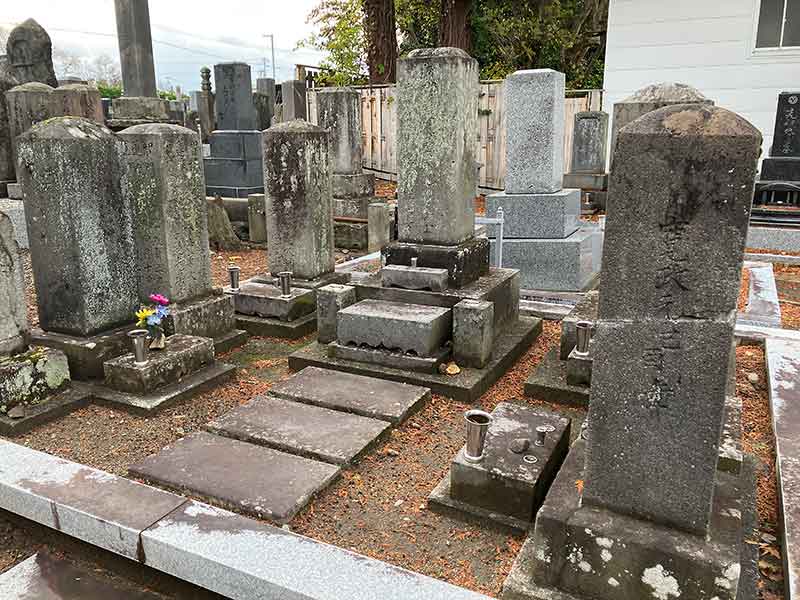
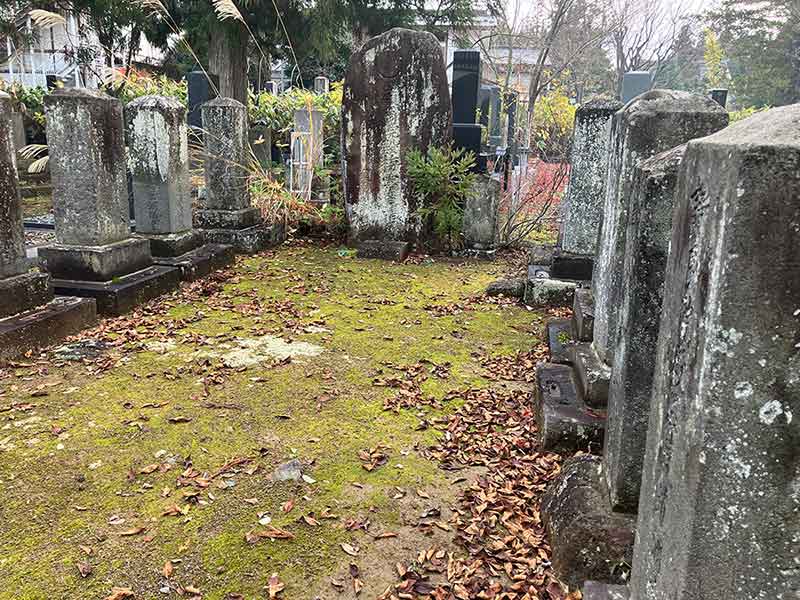
Recently, I visited the graves of Soeda Gizaemon Sadatoshi and Tsugaru Genba Masatomo. Because the names of the temples were mentioned in academic papers, they were easier to find, and the priest kindly guided me. I sensed an indescribably solemn atmosphere there, and I also made some personally surprising discoveries.
Grave of Soeda Gizaemon Sadatoshi
Grave of Tsugaru Genba Masatomo
Whenever I can make time, I investigate small fragments of information related to Hongaku Kokki-ryu. I feel that, at this moment, information about the tradition still remains scattered here and there throughout Tsugaru, but only just barely.
I have been working on this investigation almost every day until after midnight. But continuing alone like this is beginning to bring me close to my physical and mental limits. Perhaps I am simply anxious because time feels so limited. Each day I move forward only to take steps back, and I find myself reflecting on my own inadequacy.
Next year I will be busy for several months with a professional examination, so I may have pushed myself too hard before that begins. Before I damage my health, I have started to rethink how I am approaching this work.
In 1963, the style attracted attention by forming a sports youth group ahead of much of the country, including both boys and girls. There was also a live appearance on RAB, Aomori Broadcasting, in 1965. It appears that not only boys but also girls trained at the time, suggesting that the tradition was deeply rooted in the Tsugaru region.
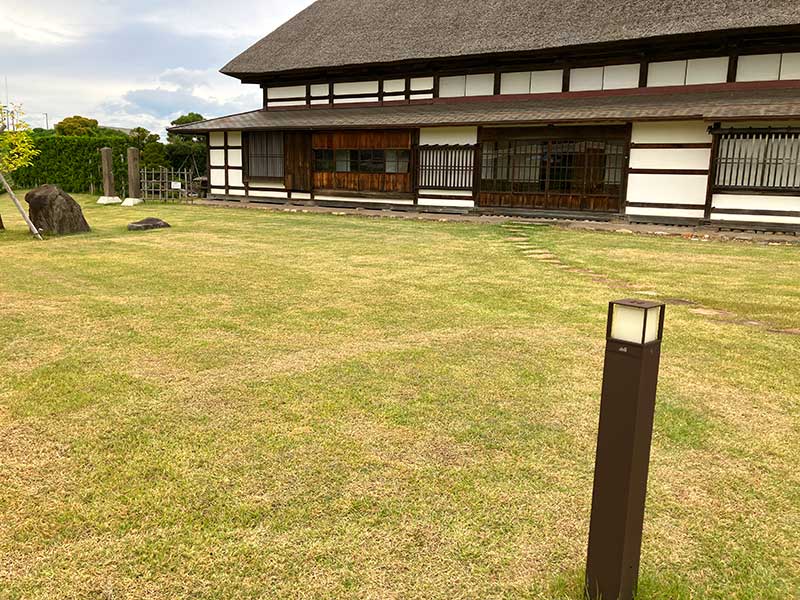
At the former Ishidoya Residence beside the Horikoshi Castle Ruins, we gave a demonstration of Hongaku Kokki-ryu Yawara, Hayashizaki Shin Muso-ryu Iai, and Bokuden-ryu at the request of the Cultural Properties Division of the Hirosaki City Board of Education. University and high school students also participated in the Hongaku Kokki-ryu Yawara demonstration, creating a warm atmosphere shared with the audience.
On Sunday, September 14, demonstrations of Bokuden-ryu, Hayashizaki Shin Muso-ryu Iai, and Hongaku Kokki-ryu Yawara were held at the Sasamori Residence, a nationally designated Important Cultural Property. University and high school students also participated in the Hongaku Kokki-ryu Yawara demonstration. It made me feel that, long ago, such things may have been part of everyday life.
I received what might be called proof that I have been working hard. Due to heavy smartphone use, excessive keyboard use, and the added strain of martial arts verification work, my wrist became overloaded. I was diagnosed with an ulnar-side ligament injury. In a strange way, it felt like evidence that I had been pushing myself.
My wife and I have nine PCs between us, and I have been upgrading seven of them from Windows 10 to Windows 11, while also testing online calls. It is frustrating not to be able to move forward as quickly as I would like.
I recently participated in training in Bokuden-ryu swordsmanship, which is said to share certain roots with Hongaku Kokki-ryu. The practice involved entering with a short sword against an opponent holding a long sword, allowing us to experience distancing, or ma-ai, directly. As I advanced toward the opponent with a short sword in one hand, at a certain distance my body reacted: Stop. Do not go any farther. My feet almost stopped on their own.
Through this experience, I confirmed that the danger-sensing ability I thought had faded after my father’s death still remains within me.
Even during the Neputa Festival and Obon season, I have continued solo practice within reasonable limits. I have repeatedly had interesting experiences in which I suddenly remember small details and key points of techniques I had forgotten.
During the Hirosaki Neputa parade period, I went to see the Neputa float that Shubudo participated in. For my part, I have been almost entirely occupied with verification practice, photographing old documents, and organizing materials.
On July 20, I attended a hands-on workshop at Higashin Arena in Sumida, Tokyo, commemorating the publication of Exploring Hongaku Kokki-ryu, Volume 1 by Masamichi Kono of the Shinfukan Bugei Research Institute. Anyone eligible to attend would certainly have benefited from taking part.
I discovered Master Otsu’s certificate and record of transmission. Several points that had previously been unclear are beginning to emerge as hypotheses.
On June 28 and 29, Masamichi Kono of the Shinfukan Bugei Research Institute visited Shubudo, where a research training session on Hongaku Kokki-ryu Yawara was held. I learned a great deal from the experience.
Updates
UpdatesNHK World-Japan NINJA TRUTH
Media
NINJA TRUTH
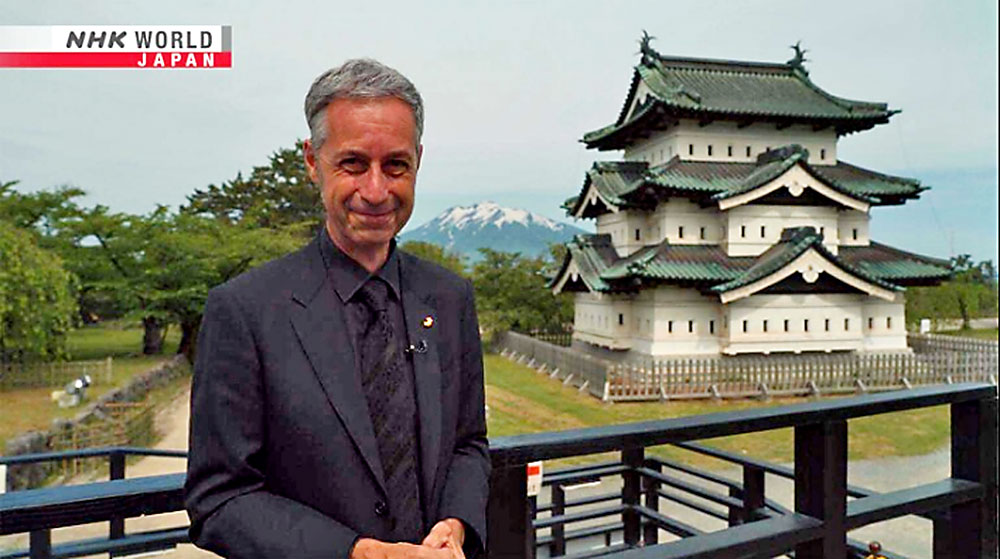
Hongaku Kokki-ryu Yawara, an old martial art of Tsugaru, was featured on NHK World-Japan’s program NINJA TRUTH.
The Hirosaki domain, which once ruled the Tsugaru region of Aomori, maintained a ninja group known as the Hayamichi-no-mono for approximately 200 years. In this program, the history and transmission of Hongaku Kokki-ryu Yawara, the martial art practiced by the Hayamichi-no-mono, are introduced and demonstrated by myself, Mr. Oyama of Shubudo, and members of Shubudo.
Please note: this is an international program and is not available in Japanese.
View the NHK World-Japan page
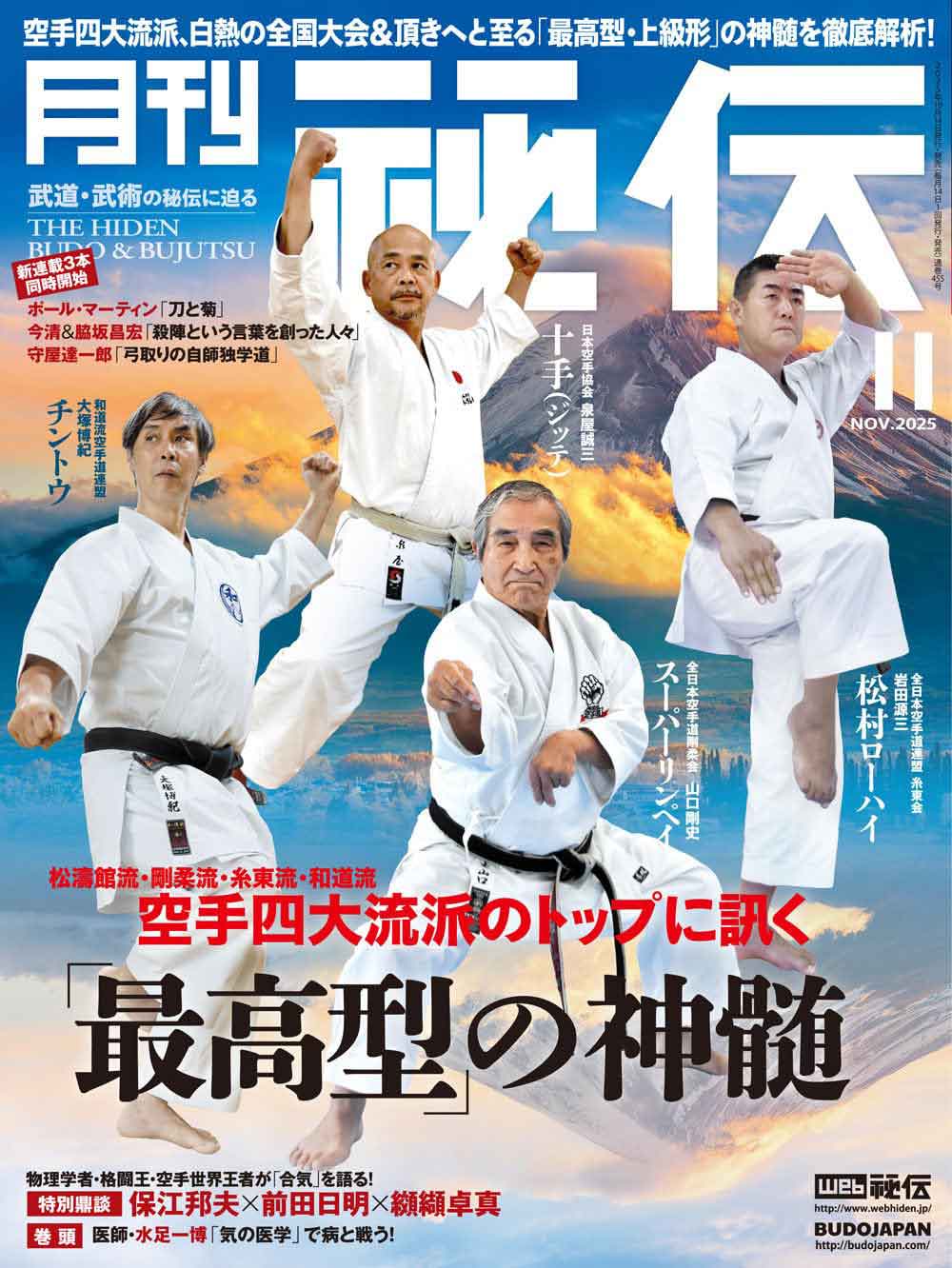
Thanks to the cooperation of many people, I was briefly featured in Monthly Hiden, November 2025 Issue: Approaching the Secrets of Budo and Bujutsu.
Background and Reason for Starting These Activities
Background(1) Why I remained silent for many years
I am the eldest son of the late Kosaku Shibata, the man to whom Master Yasusuke Otsu, the 11th-generation headmaster, entrusted the future of the tradition with the words, I leave the rest to you.
I grew up hearing from my father about both the outward and hidden sides of the tradition, and I personally experienced many of its mysterious techniques. Even so, I refrained from public activity for many years. More than anything, I feared whether I should involve myself with a tradition that carried the weight of secrecy and hidden transmission.
(2) Why I decided to begin
By nature, I prefer a quiet life, and I once believed that the history of the tradition should eventually be left quietly to the passage of time.
In recent years, however, I have seen information that differs from historical fact spread online and elsewhere. I became especially concerned by misunderstandings regarding Master Otsu, whom I knew personally as a child and who left a dignified impression on me, and by the way the tradition has sometimes been described as lost simply because certain people connected with it have passed away.
If things were left as they were, the truth might disappear without ever being known, while mistaken information alone remained as history. Once I too am gone, no one will remain who directly heard what my father told me. While I was feeling this urgency, a series of mysterious connections, including my meeting with Mr. Oyama of Shubudo, seemed almost as if my father were pushing me from behind. That is when I resolved to begin these activities.
- Correcting misinformation about Master Otsu Regarding the late Master Yasusuke Otsu, it is sometimes said that Hongaku Kokki-ryu Yawara was lost when he passed away. However, the fact is that Master Otsu fulfilled his role as headmaster and entrusted the next generation before peacefully departing this world. Because these matters were handled quietly and not publicly announced, it is understandable that many people do not know the details. Still, inaccurate information must not be allowed to cast even the slightest shadow on Master Otsu’s name or achievements. This is why I have recorded the facts here.
- Toward restoring the martial techniques preserved in old documents As I faced the old documents left by my father, I spent many days wondering how far I could clarify the techniques in my own lifetime. A major turning point came in late June 2025, when Master Toshihiro Kono of Shinfukan traveled all the way to Hirosaki. Through conversations with him, memories of training with my father vividly returned, and questions that had remained unclear began to open up as if a fog were lifting. With gratitude for this connection, I intend to continue carefully restoring the techniques recorded in the old documents, one step at a time.
-
Connecting the tradition to the future: finding successors and the dream of publication
I have begun looking for people who may carry this path forward so that it does not end with me. Little by little, I am reaching out to those with whom I feel a connection, hoping that this work may one day be entrusted to the future.
I am also considering several possible book projects as a way to leave a record of these activities.
[Publication Plan 1] As a son whose father was also his teacher, I would like to write honestly about what I saw and felt while growing up in a somewhat unusual family environment, and about the Hongaku Kokki-ryu Yawara that appeared through my own eyes.
[Publication Plan 2] I would like to revisit the extraordinary movements and stories of my father that I glimpsed as a child, and consider what they may have meant through my current thoughts and hypotheses.
[Publication Plan 3] Master Otsu is said to have passed down to only a small number of people certain teachings for helping children and grandchildren naturally acquire the foundations of old martial arts. These may hold clues for awakening physical potential that modern people have allowed to sleep.
[Publication Plan 4] I would like to summarize the insights I have gained through practice into why techniques that my father and others performed so naturally are so difficult for us today.
-
For the future, fifty or even one hundred years from now
In carrying out these activities, Mr. Oyama of Shubudo and I found that we shared a deep wish to create something that could serve the future. Even if the martial traditions transmitted in Tsugaru were temporarily interrupted by the flow of time, we wanted to leave clues and guideposts so that future seekers might once again bring light to their techniques and spirit.
Old martial arts are crystallizations of wisdom that explored the potential of the human body to its limits. When we begin to unravel the techniques one by one, their carefully calculated continuity of movement makes me deeply aware of the extraordinary wisdom our predecessors possessed. -
Making Tsugaru’s old martial traditions a source of regional pride as traditional culture
One of our aims is to see the old martial arts rooted in Tsugaru and Aomori recognized as an official part of the region’s traditional culture. This has also been a long-held wish of Mr. Oyama of Shubudo.
I have heard that many teachers in Tsugaru have worked toward this goal for more than half a century, yet the wish remains unfulfilled. I hope, in my own small way, to inherit the passionate efforts of those who came before and lend whatever support I can.
A note of gratitude and daily inquiry
This work could never be carried out by my strength alone. I would like to express my heartfelt gratitude to everyone who has provided materials, information, and words of encouragement, and also to my wife, who continues to watch over me quietly even when she is surely exasperated.
Even while working, eating, or shopping at the supermarket, I sometimes find myself moving my arms and testing how the body should be used. My wife sees through it immediately and says, You’re doing it again. But I suspect my father was the same, constantly exploring this path in every moment of his life. That may be why he could answer any question instantly. Now, I feel that I am following his back.
Purpose and Policy of These Activities
Mission & Policy(1) The thoughts at the root of this work
These activities began from the wish to record, in as clear a form as possible, what our predecessors protected and transmitted.
The collection and organization of information concerning Hongaku Kokki-ryu Yawara covers many areas, including history, martial technique, old documents, testimony, photographs, video, and audio.
For me, this work has the following meanings:
(1) Respect for predecessors: to correct misunderstandings about Master Otsu and show respect to those who founded and protected the tradition.
(2) Responsibility to the next generation: to prepare the path as far as I am able and pass on a clean baton to those who follow.
(3) Filial devotion: to give shape, even if only in part, to the dream my late father could not fulfill — the flourishing of the tradition.
One of the forces driving me now is a question I held for many years: why was my father unable to actively work for the flourishing of the style? As I slowly unravel the times in which he lived, I feel that I am beginning to glimpse the meaning behind his mysterious actions. For now, I can only express this as a hypothesis, but I hope to record it in a future publication.
(2) Scope of information disclosure
We do not publicly disclose the specific technical principles or details of the techniques of Hongaku Kokki-ryu Yawara.
We also do not publicly display the license my father received. In this digital age, this is a responsibility we bear in order to prevent easy reproduction or misuse and to protect the legitimacy of the tradition. The license itself is carefully stored in a secure and trusted location.
We ask for your understanding.
(3) A request to those researching this tradition
I am deeply encouraged by the existence of those who are exploring Hongaku Kokki-ryu Yawara through old documents and other sources. I sincerely thank you.
In the midst of your earnest research, I would be grateful if you would keep in your heart even a small measure of respect for the generations of teachers who built, protected, and transmitted this tradition. I believe that such respect becomes a guidepost leading toward the spirit that lies beyond the techniques.
Thank you very much for reading.